Last updated November 21, 2026
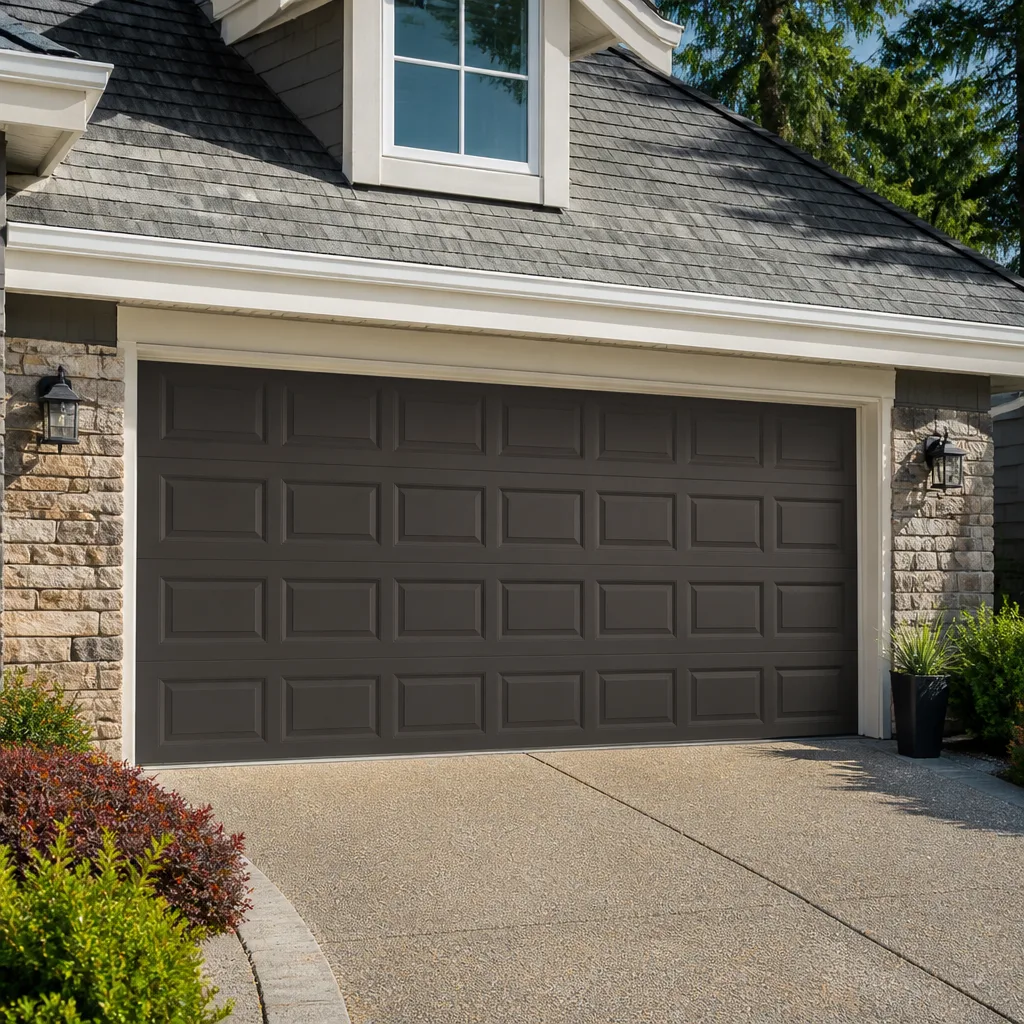 Raised-panel steel
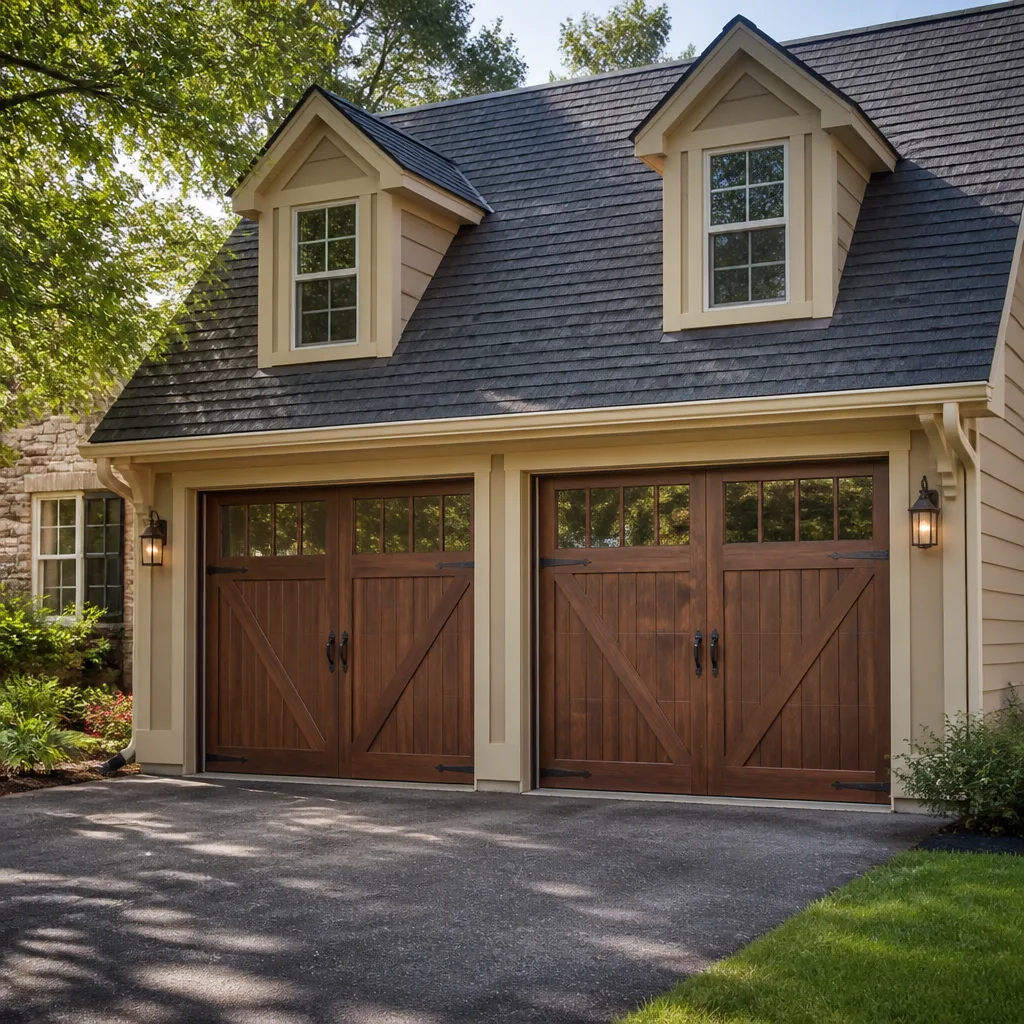 Carriage house
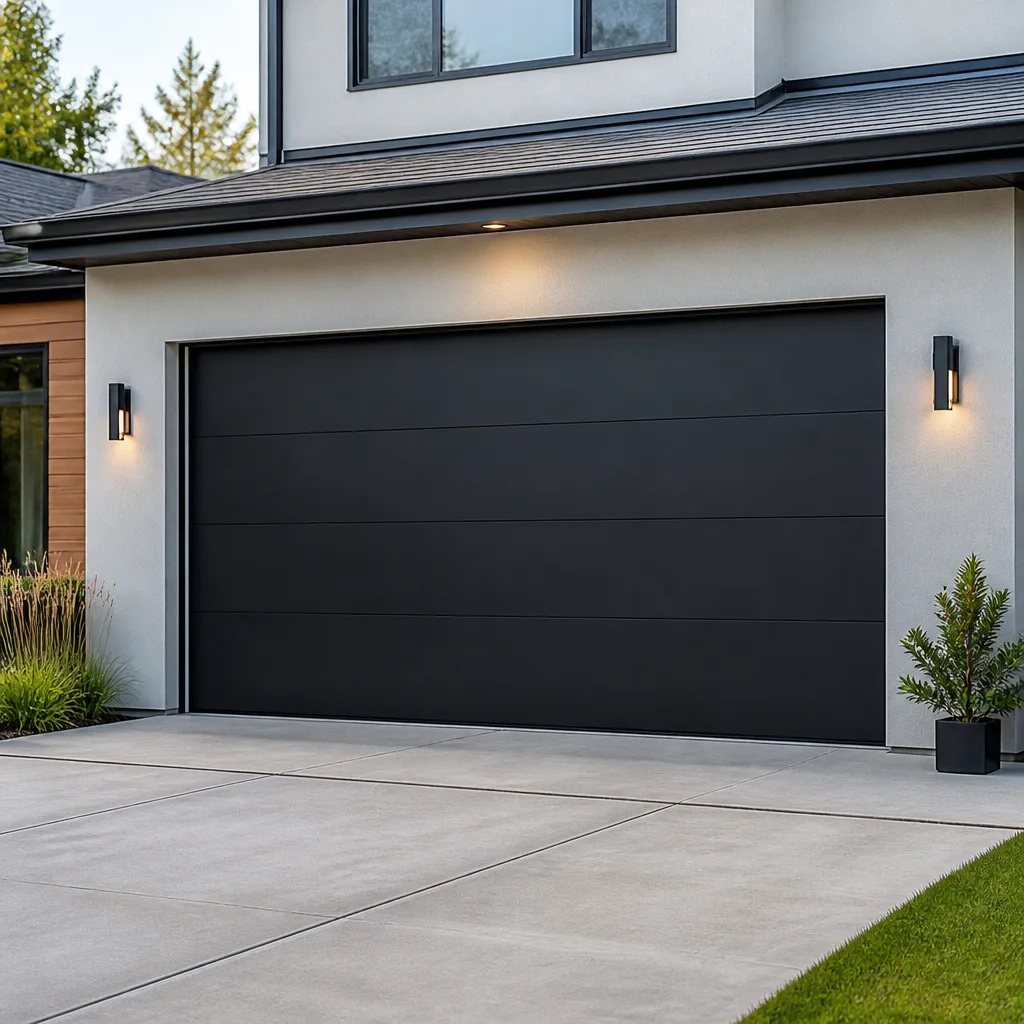 Modern flush
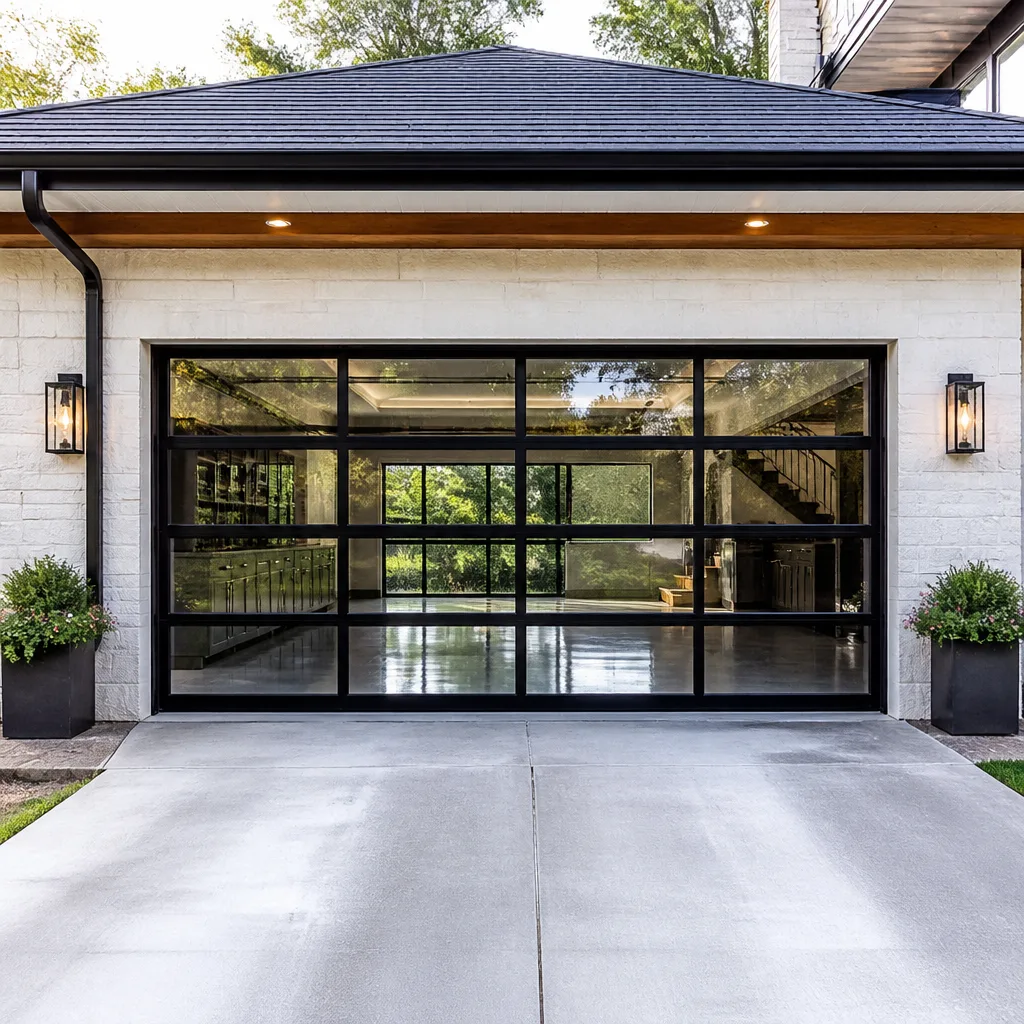 Full-view glass
 LiftMaster openers
 Chamberlain openers
Full 25-point door and opener safety check with every visit - springs, cables, rollers, tracks, and your LiftMaster or Chamberlain opener included
You get a price before we start. It does not change when the pro arrives.
Get your free estimateGarage Door Warning Signs: A Northeast Philadelphia Homeowner’s Reference Guide
A garage door that hesitates for two seconds before it opens isn’t “getting old.” That pause is a force-limit sensor reporting that spring tension has drifted, and it has a specific fix that costs a fraction of what you’ll spend if you let it run for another month. Most failures in Northeast Philadelphia homes don’t arrive without warning. They send signals for weeks: a grind that only shows up in the cold, a slight tilt at the top panel, a cable that’s gone slack on one side. This guide decodes those signals with enough detail that you can describe exactly what your door is doing before you call anyone. You’ll learn which sounds and movements point to which parts, which signs mean stop using the door today, and how Northeast Philadelphia’s temperature swings create false alarms twice a year.
Quick Answer
The most common garage door warning signs are a door that pauses or reverses before closing, grinding or squealing during travel, a visible gap in a torsion spring, a slack or frayed cable, uneven panels, and an opener that runs but doesn’t lift the door. Five signs mean stop immediately: a broken spring, a snapped cable, a bent or separated track, a door hanging off-level, and any door that closes on its own. The rest can usually be monitored for a short window, but they don’t fix themselves.
Styles & brands we work with
- Raised-panel steel
- Carriage house
- Modern flush
- Full-view glass
- LiftMaster openers
- Chamberlain openers
Table of Contents
- The Symptom-to-Cause Table: What Your Door Is Telling You
- The Five Signs That Mean Stop Using the Door Immediately
- Warning Signs You Can Monitor, Not Ignore
- Torsion Springs vs. Extension Springs: Two Different Failure Signatures
- Why October and March Fool Northeast Philadelphia Homeowners
- Opener Warning Signs You Can Read Yourself
- A Step-by-Step Monthly Inspection You Can Do Safely
- How Northeast Philadelphia Housing Shapes the Failure Pattern
The Symptom-to-Cause Table: What Your Door Is Telling You
Garage doors fail in three channels: sound, movement, and visible condition. Learning to read them separately keeps you from guessing. Here’s how the symptoms map to the parts that cause them.
- Grinding during travel – dry or worn rollers, or a torsion spring that’s lost tension and is dragging the door through its cycle. If the grind only happens in cold weather, suspect rollers first.
- High-pitched squealing – metal-on-metal contact at the hinges or rollers. Usually lubrication, sometimes a hinge that’s worn through its pin.
- Loud popping or banging – a torsion spring that has just snapped, or a cable that has come off its drum. This one is not ambiguous; it sounds like a gunshot inside the garage.
- Rattling that’s new – loose hinge bolts, or a track that’s worked its way out of alignment.
- Slow or hesitant opening – spring tension drift, or an opener motor that’s straining against a door that’s heavier than it should be.
- Jerky or uneven travel – a bent track, a worn roller, or one cable carrying more load than the other.
- Door tilts to one side – a broken spring on one side of a two-spring system, or a snapped cable.
- Visible gap in the spring coil – a torsion spring has broken. There’s no monitoring window here.
- Slack or frayed cable – the cable has jumped its drum or is failing at the crimp. Stop the door.
- Bent track – impact damage, or a door that’s been running out of alignment long enough to bend the rail.
When you can name the symptom and the part, you skip the diagnostic guessing game. Our technicians have up to 8 years of experience, and we work on the brand you already have rather than starting from scratch with every call. If you’d rather have a specialist look at it before you decide, Garage Door Repair Northeast Philadelphia covers the full scope under one roof.
The Five Signs That Mean Stop Using the Door Immediately
Five warning signs mean you should stop operating the door and disconnect the opener until a technician looks at it. Running a door in any of these conditions risks the door coming down uncontrolled, and that’s how people get hurt.
- A broken torsion spring. You’ll see a clean gap in the coil above the door. The door is now dead weight on the opener and cables. Don’t try to lift it by hand.
- A snapped or slack cable. Cables are under extreme tension and can whip when they fail. Don’t touch one, and don’t run the door to “see if it’s still working.”
- A bent, cracked, or separated track. A door that comes out of its track can fall. Stop it where it is.
- A door hanging visibly off-level. If one corner sits lower than the other when closed, one side has lost its support. Don’t cycle it.
- A door that closes on its own or reverses unpredictably. A door that moves without command is a control failure, and the safety reverse may not be working either.
Springs and cables are not a DIY job. They’re under load that can cause serious injury, and we handle them safely as a named service rather than a sideline. When the door won’t move, we do – emergency garage door service is a real offering here, not a marketing line, and it exists for exactly these five situations.
Warning Signs You Can Monitor, Not Ignore
Some warning signs allow you to keep using the door while you plan the repair. These are the ones with a short, safe monitoring window – not a free pass to wait indefinitely.
- Occasional squeal or grind. Watch whether it’s every cycle or only in the cold. If it’s consistent, it’s mechanical wear.
- Slow opening with no pause. A door that’s uniformly slower than it used to be is likely losing spring tension. It gets worse steadily.
- A single rattle at the start of travel. Loose hardware. Tighten what you can reach safely and watch for it returning.
- Opener light flickering. Often a wiring or logic board symptom rather than a door problem. Worth a diagnostic before it leaves you locked out.
- Weather seal wear along the bottom. Not a safety issue, but it lets cold air and pests into a Northeast Philadelphia garage all winter.
The distinction matters because the monitoring window is measured in weeks, not months. A slow door becomes a strained opener, and a strained opener becomes a motor replacement on top of the spring repair. If you’re not sure which category your door is in, put the question to a specialist. Our garage door repair service starts with a diagnosis, and any price is quoted and agreed before work starts.
Torsion Springs vs. Extension Springs: Two Different Failure Signatures
Torsion and extension springs don’t fail the same way, and the difference matters for safety. Torsion springs are mounted horizontally above the door and twist to store energy. Extension springs run along the horizontal tracks on each side and stretch.
How a torsion spring telegraphs failure:
- The door gets progressively harder to lift and the opener struggles at the start of travel.
- You hear a single sharp pop when it goes. That’s the coil releasing all at once.
- A clean gap appears in the coil, often on one side of a two-spring setup, which leaves the door tilted.
- The door becomes immovable by hand. Never test this yourself with the opener connected.
How an extension spring telegraphs failure:
- The door slows gradually and may sag on one side before anything breaks.
- The spring visibly stretches longer than its pair on the opposite side.
- You may hear a stretched-out twang or see the spring hanging loose after it fails.
- Extension springs are the ones most often missing their safety cables, which is the difference between a contained failure and a spring flying across the garage.
The safety distinction is why we treat spring repair as its own discipline. A torsion spring failure can drop the door; an extension spring failure can send hardware through the air. Either way, the inspection is the same: look, don’t touch. Pricing for one spring is typically a fraction of what the same door costs to refit after a failure damages the panels or track, and we quote the pair separately because matched springs usually get replaced together.
Why October and March Fool Northeast Philadelphia Homeowners
Northeast Philadelphia’s temperature swings produce false-positive warning signs twice a year – roughly when the season changes in October and again in March. A door that grinds on a 30-degree morning and runs quiet by afternoon isn’t necessarily failing. Metal contracts in the cold and the spring tension shifts with it.
Here’s how to tell a seasonal symptom from a real failure:
- Check the pattern. If the symptom appears only on cold mornings and disappears once the garage warms up, it’s likely thermal. If it persists on a mild day, it’s mechanical.
- Listen for consistency. A seasonal grind is intermittent. A worn roller or failing spring is consistent every cycle.
- Watch the travel. A door that speeds up once the garage warms is thermal. A door that stays slow all day is losing spring tension.
- Look at the seal. Cold weather stiffens the bottom seal, which can make a door seem like it’s dragging when it’s only pressing harder.
- Re-test after a warm day. If the symptom returns on the next cold morning, it’s real enough to diagnose.
We see this cycle repeat in Northeast Philadelphia every year, and it’s why a fall inspection catches problems before the first hard freeze rather than after. The same door that squealed in October is the one that snaps in January. If you’re not sure which side of the line you’re on, a diagnostic visit settles it faster than another month of listening.
Opener Warning Signs You Can Read Yourself
Your opener will often tell you what’s wrong before the door does. Chamberlain and LiftMaster units, which are among the most common in Northeast Philadelphia garages, use a diagnostic light code that blinks in a pattern. Counting the blinks is the single most useful thing a homeowner can do before calling.
What to watch for:
- Blinking light patterns. Chamberlain and LiftMaster openers blink the diagnostic LED a set number of times, pause, then repeat. Count the blinks and note whether the door is up or down when it happens. That pattern points to a specific circuit – safety sensor, travel limit, or logic board.
- Opener runs but the door doesn’t move. The motor is fine; the drive is not. Could be a stripped gear, a broken belt or chain, or a disconnected trolley.
- Door reverses immediately after touching the floor. The safety reverse is triggering. Check for an obstruction first, then suspect the force limit setting.
- Remote works intermittently. Usually a battery or a signal issue, sometimes a logic board on older units.
- Genie units often signal a problem with a repeated flash or a refusal to respond to the wall control. Same rule: note the pattern, then call.
Reading the code before you call saves time on the diagnostic and gets you a straight answer faster. If the opener needs more than a reset, our garage door opener repair service covers the major brands we’re trained on, including Chamberlain and Genie.
A Step-by-Step Monthly Inspection You Can Do Safely
A five-minute visual check once a month catches most warning signs before they become failures. Do this with the door closed and the opener disconnected if you can reach the release safely. Never put your hands near springs, cables, or the bottom bracket.
- Look at the springs. From a distance, check for a gap in the torsion coil or a stretched extension spring. Don’t touch.
- Check the cables. Look for slack, fraying, or a cable off its drum. If you see any of these, stop and call.
- Inspect the track. Run your eyes along both vertical and horizontal tracks for bends, dents, or gaps at the joints.
- Test the balance with the door half-open. Lift the door by hand (only if it’s light enough to move easily) to about waist height and let go. A balanced door stays put. One that drifts down is losing spring tension.
- Test the safety reverse. Place a small object under the closing door and confirm it reverses on contact. This is the one test worth doing every month.
- Listen on the next cycle. Note any new sound and where in the travel it happens.
- Check the weather seal. Look for gaps along the bottom that let cold air in.
If step 4 or step 5 fails, don’t run the door until it’s looked at. That’s the difference between a repair and a replacement, and it’s the single biggest cost lever in this trade.
How Northeast Philadelphia Housing Shapes the Failure Pattern
Northeast Philadelphia garages aren’t all built the same, and the housing stock drives different failure patterns. The rowhouses and twins around Mayfair and Holmesburg often have attached garages that share a wall with living space, which means a door that’s failing quietly also lets cold air and moisture into the house. Detached garages in Somerton and Bustleton tend to run older openers and original hardware longer, so opener failures show up before spring failures. In Parkwood and Pennypack, where lots are larger and trees overhang the driveway, track damage from fallen branches is more common than in tighter blocks.
The common thread is that Northeast Philadelphia homes often carry original garage hardware well past its service life, and the warning signs appear gradually enough that homeowners adjust to them without noticing. If you’ve been living with a grind for two winters, that’s not normal wear – it’s a part telling you it’s near the end.
For a full replacement rather than a repair, our garage door installation service covers measuring, brand selection, and fitting in one visit. We’re trained on Clopay and Amarr among other major brands, so you’re not limited to whatever a generalist happens to stock.
Common Mistakes to Avoid
- Greasing a torsion spring. Lubricant on a spring hides the friction that tells you it’s failing. Grease rollers and hinges instead, and leave springs alone.
- Force-adjusting the opener to compensate for a slow door. Turning up the force limit masks a spring problem and strains the motor. Fix the door, not the setting.
- Ignoring a one-sided tilt. In a two-spring system, one broken spring means the other is carrying double the load. It fails next.
- Replacing an opener when the door is the problem. If the door is heavy, a new opener will burn out too. Diagnose the door first.
- Waiting out the October grind. A seasonal symptom that persists past the first warm week is a real failure, not the weather.
- Running a door with a bent track to “see if it clears.” A door that comes out of a bent track can fall. Stop it.
- Hiring a generalist for a spring job. Springs and cables need a specialist. One trade, done right, is the only safe rule here.
See the difference
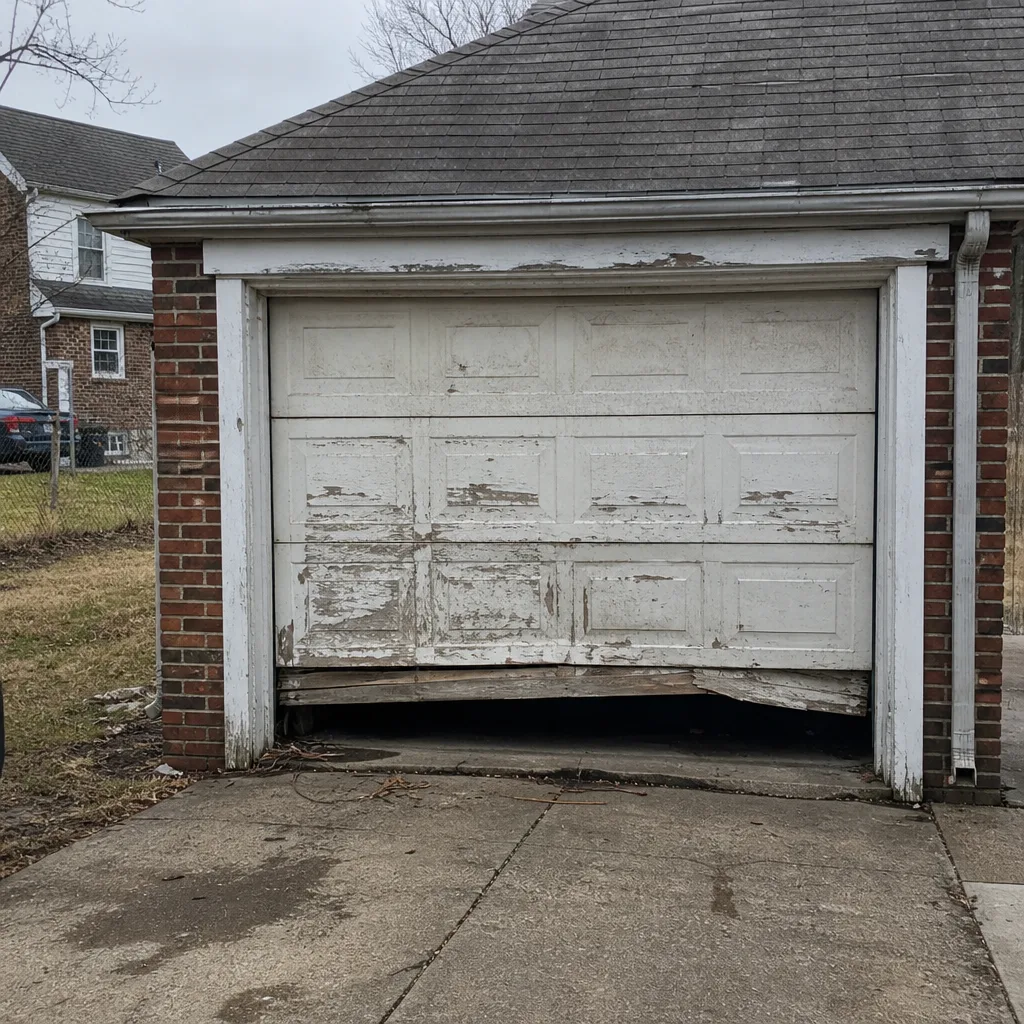 Before
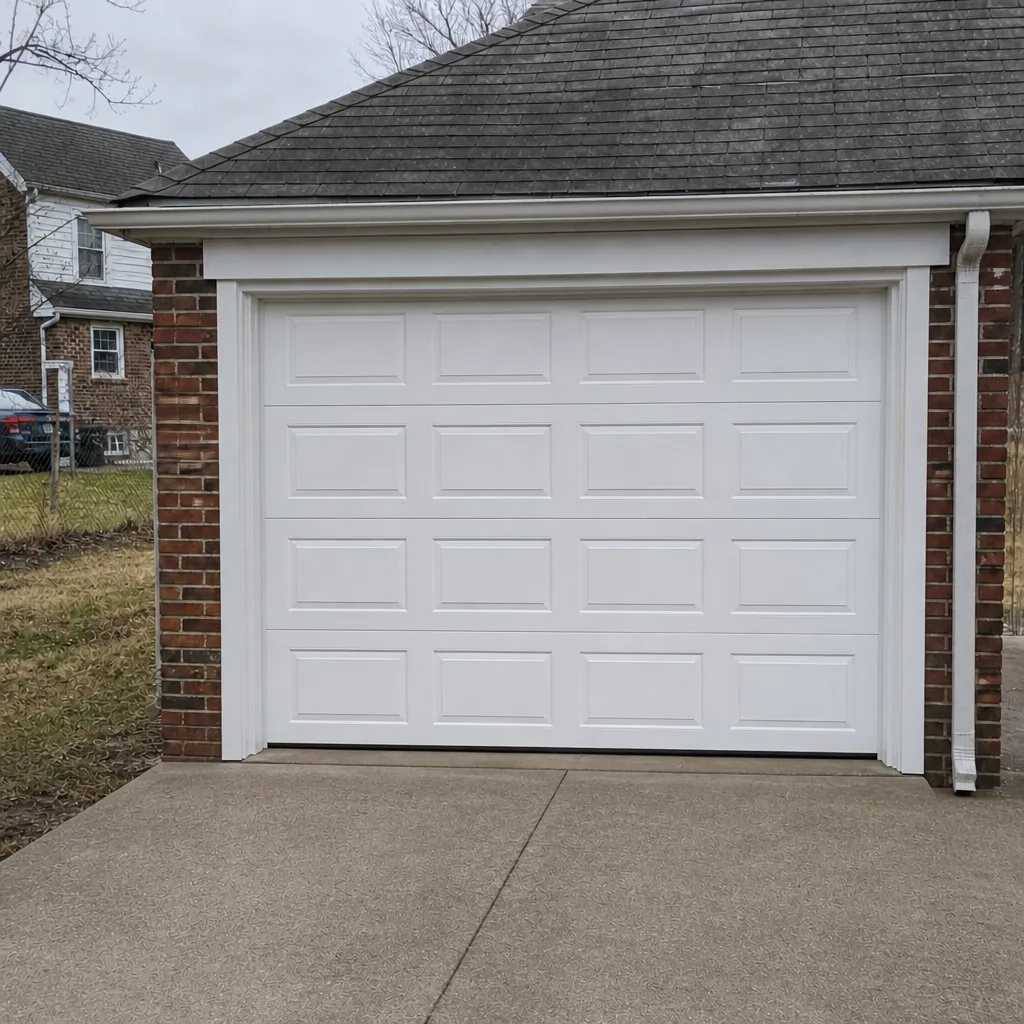 After
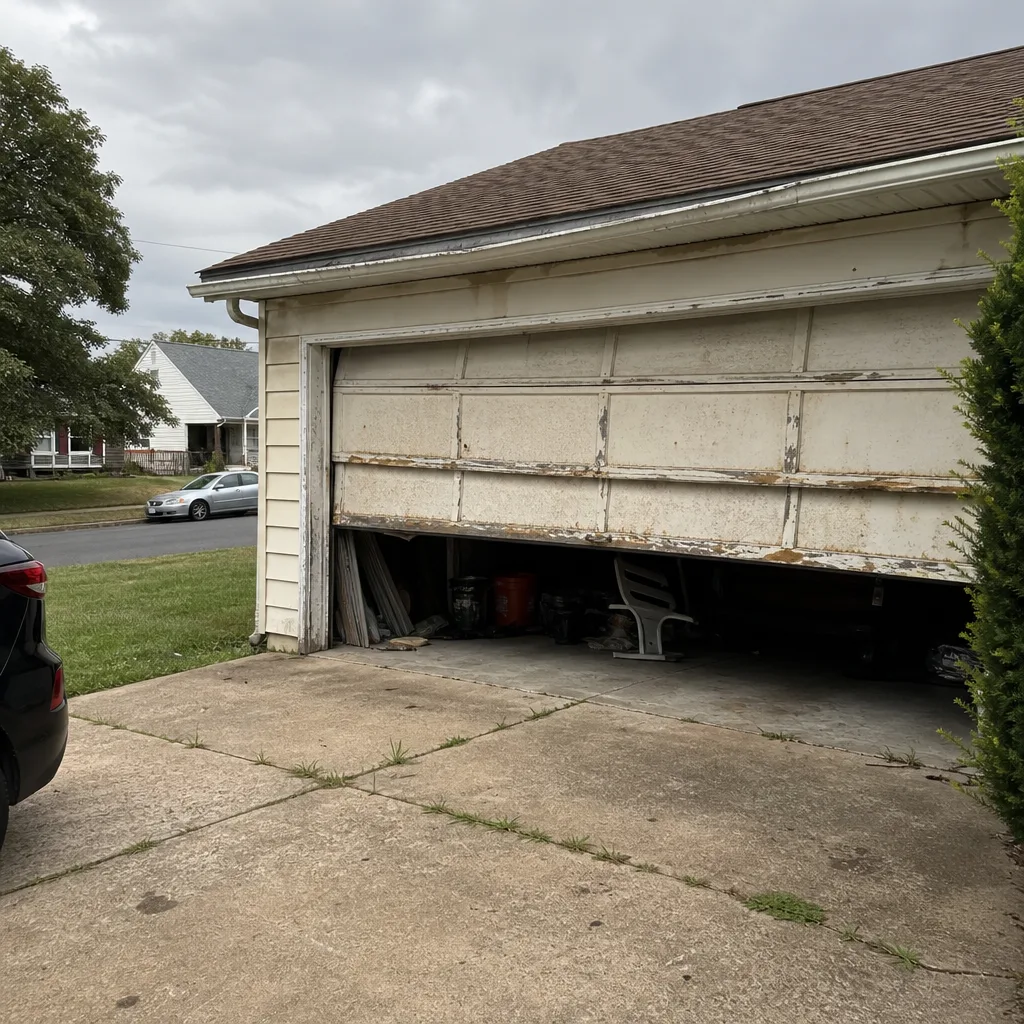 Before
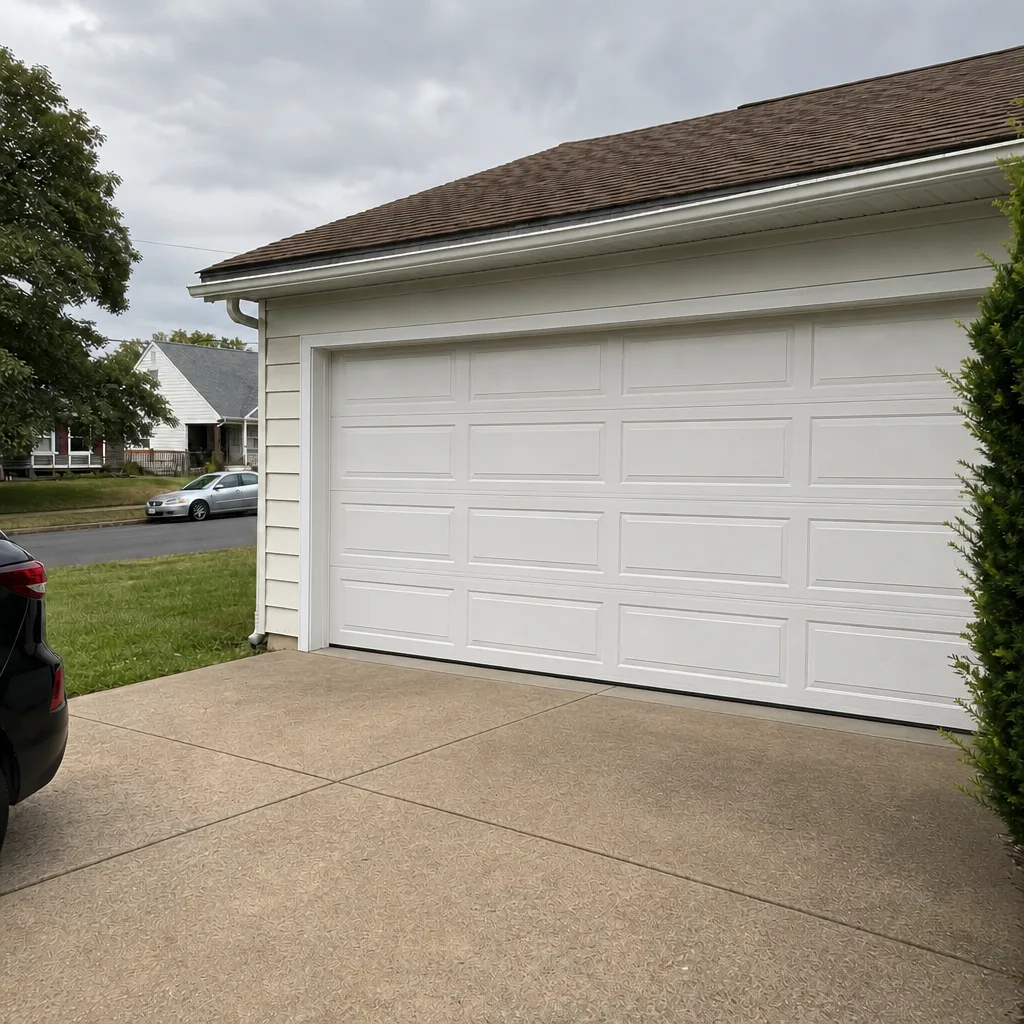 After
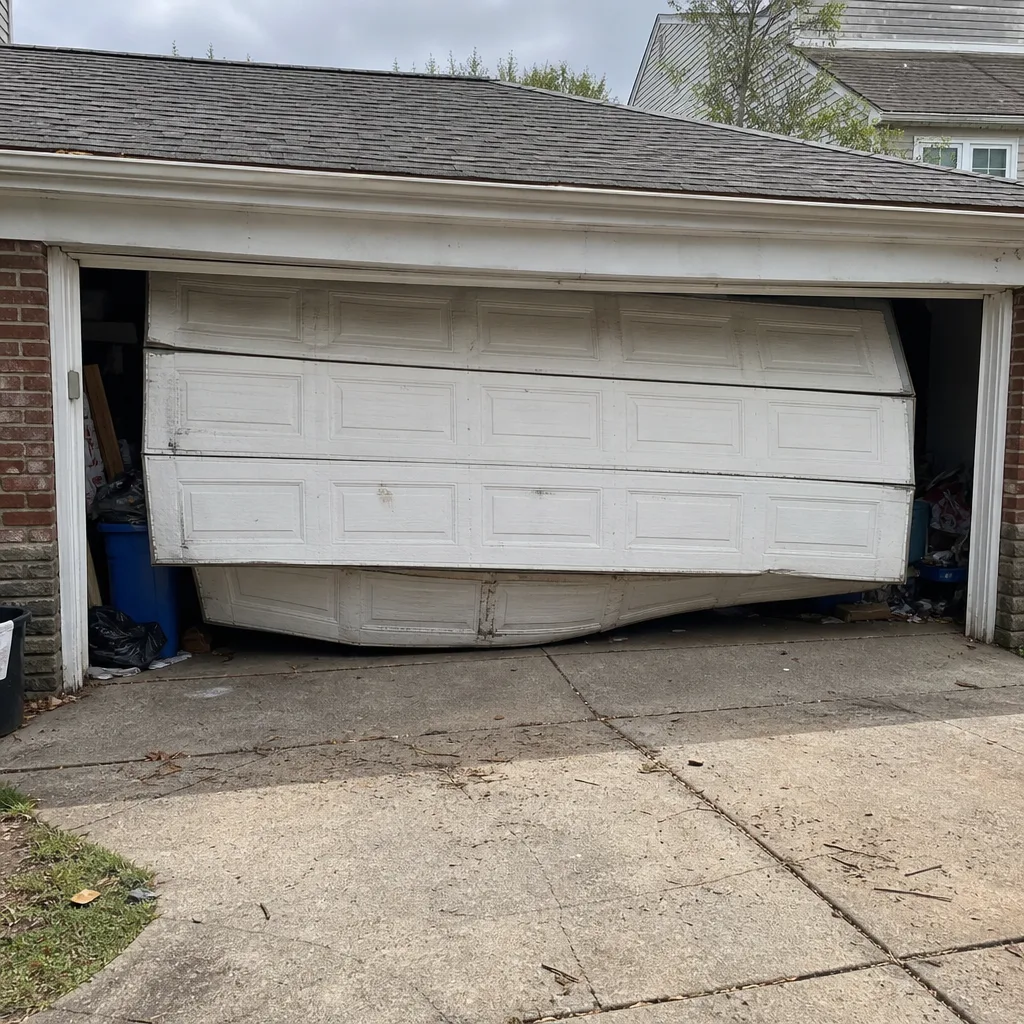 Before
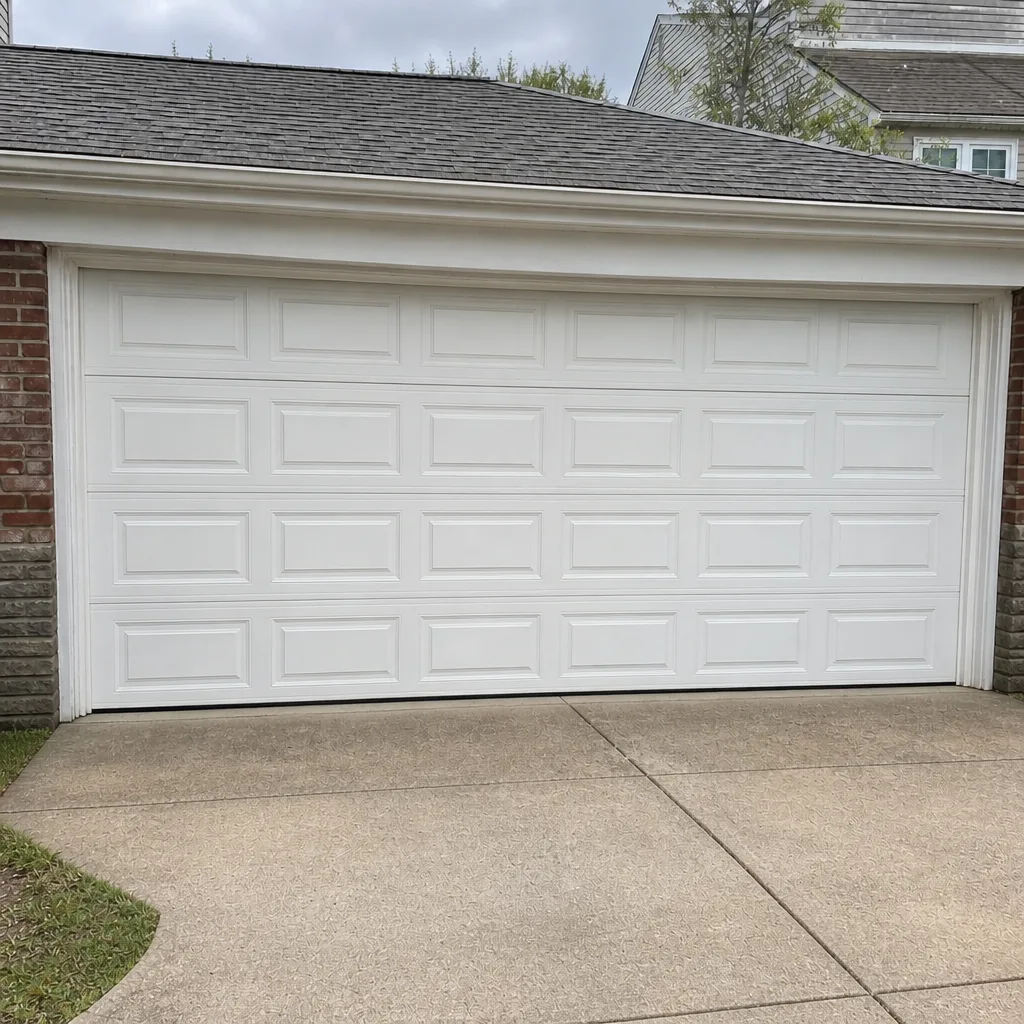 After
When to Call a Professional
Call a professional today if you see a gap in the spring, a slack cable, a bent track, a door that tilts, or a door that moves on its own. Those are the five stop signs, and they don’t improve with time. Call within the week if the door has become noticeably slower, if the opener is straining, or if a sound has persisted for more than a few cycles. And call before the first hard freeze if you noticed a grind in October that hasn’t cleared. Garage Door Repair Northeast Philadelphia offers free estimates in Northeast Philadelphia – call (855) 337-1296. We’ll tell you what the symptom points to and what it costs to fix before we touch anything.
Frequently Asked Questions
The first warning signs are usually a slow or hesitant opening, a new grinding sound during travel, and a door that doesn’t sit perfectly level when closed. These appear weeks before a failure and point to spring tension drift or worn rollers. If you notice any of them, call (855) 337-1296 for a free estimate.
A sharp popping or banging sound followed by a door that won’t move means a torsion spring has snapped, and you should stop immediately. A grinding or squealing sound is usually a monitoring sign, not a stop sign. When in doubt, leave the door down and call for a diagnostic.
A seasonal symptom appears only on cold mornings and disappears once the garage warms up; a real failure shows up consistently, even on mild days. Northeast Philadelphia’s October and March temperature swings make thermal symptoms common. If the symptom persists past a warm day, it’s real.
Yes. Chamberlain and LiftMaster openers blink the diagnostic LED a set number of times, pause, then repeat, and the count points to a specific system. Note the number of blinks and whether the door is up or down, then call (855) 337-1296 with that detail – it shortens the diagnosis.
Spring repair is priced per spring, and a matched pair is usually replaced together, so the pair costs more than a single spring. We quote the pair separately and agree the price before work starts, so the written estimate is the number you pay. Call (855) 337-1296 for an exact quote – estimates are free.
Yes – a door that won’t close is a security risk and falls under our emergency garage door service. Call (855) 337-1296 and describe the symptom; we’ll tell you what’s likely wrong and whether to leave the door down until we arrive.
The Bottom Line
Garage door failures announce themselves. A two-second hesitation is a force-limit sensor reporting spring drift, a grind that only shows up in the cold is thermal, and a grind that survives a warm day is mechanical. The five stop signs – broken spring, slack cable, bent track, off-level door, and a door that moves on its own – mean stop using the door and call. The rest have a short monitoring window, and every one of them gets worse if you wait. Read the symptom, name the part, and call (855) 337-1296 for a free estimate in Northeast Philadelphia before the next cold snap does the diagnosis for you.
Written by the team at Garage Door Repair Northeast Philadelphia.